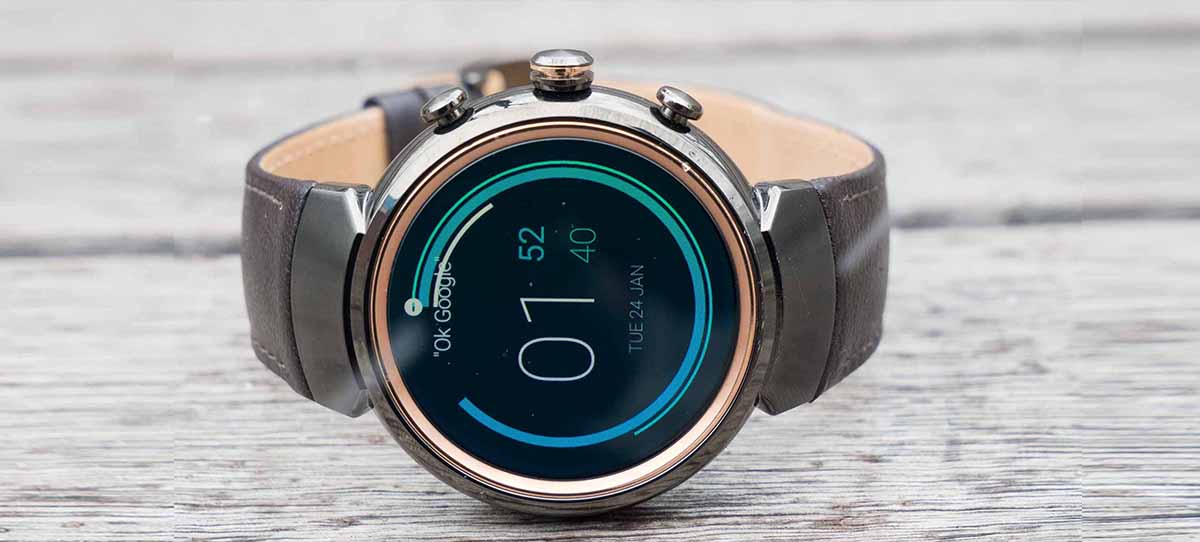
First launched way back in September 2016 at IFA, the Asus ZenWatch 3 has only just reached the UK and certain other territories. It’s the follow-up to the Asus ZenWatch 2 (obviously), a smartwatch that offered decent value but wasn’t exactly the most stylish Android Wear watch out there.
The ZenWatch 2 felt cheap and its rectangular design didn’t do it any favours. Asus’ new Android Wear smartwatch has a far classier design, with more premium materials and a new circular face – a first for Asus.
However, in the time between its announcement and subsequent release, the smartwatch landscape has changed. This has been in no small part thanks to the introduction of Android Wear 2.0, which is notably absent here, making the ZenWatch 3 feel dated right out of the blocks.
Unlike the Moto 360 there’s no sign of any ‘flat tyre’ screen shape here, which makes it look far slicker and more elegant by comparison. Like Samsung with its Gear S3, Asus has said it's taken inspiration from classic mechanical watches.
It’s used jewellery-grade 316L stainless steel against a diamond-cut bezel to give a more premium look and feel than that of the ZenWatch 2. You have a choice of gunmetal, silver or rose-gold finishes to the bezel.
The model I was sent for review had a rubber strap in a cream colour, paired with a rose-gold tint to the casing. I’d say it’s a unisex design, but perhaps erring towards more traditionally feminine tastes, aside from the large watch face.
The slightly textured band was comfortable, but after a week I noticed how mucky it got where I rest my wrist to type away on a laptop. There are also premium stitched Italian leather strap options, which give the ZenWatch 3 more high-end appeal.
A first for Android Wear when the ZenWatch 3 initially launched were the three crown buttons along the edge. These are used for navigation and you can also set them as instant shortcuts to apps.
By default the top button is set to open the ZenFit fitness-tracking app, and the bottom button puts the watch into Eco mode, which disables the touchscreen and activates Airplane mode. This button isn’t customisable, which is a little annoying as I did manage to accidentally press it a few times.
As for the display, the ZenWatch 3 uses a 1.39-inch AMOLED with 400 x 400 resolution. It’s as bright and sharp as you'd like. One strange thing I noticed was the glass created a strange visual effect along the edge of the display where its 2.5D Gorilla Glass is ever so slightly curved. You only really notice it if you view the watch angled from the top down.
The display is perfectly viewable outdoors and there’s an automatic brightness setting, which is always welcome and works well enough. Android Wear’s usual Brightness Boost is also available, as is manual brightness adjustment.
Asus is making some bold claims about its activity tracking via the previously mentioned ZenFit watch app. It claims the ZenWatch 3 can track to 95% accuracy. How it’s come to this figure isn’t really known. With no GPS inside, it relies on its six-axis gyroscope and accelerometer for step counting.
Having worn a ZenWatch 3 on one wrist and a Fitbit Alta HR on the other, the ZenWatch 3 had me as covering 13.35km during a day where I also played some five-a-side football, whereas the Fitbit Alta HR pegged me at 13.1km. In terms of steps counted, there was a difference of about 400, so there’s not a lot to separate them. This gap generally remained consistent, too.
Of course, what does separate them is a lack of a heart rate monitor on the ZenWatch 3, which is a strange omission considering the push towards using ZenFit. This would have fleshed out its health and fitness offering. It’s only IP67 rated, too, so fine for the shower but not something you should swim with.
The ZenFit app can also track push-ups and sit-ups, too. The former I found counted with perfect accuracy, managing to detect every rep I manually counted. With sit-ups I saw a few reps missed, but perhaps that’s a good thing in order to demand perfect repetitions.