The Garmin Fenix 5X is the largest of three new Fenix 5 smartwatches and, as such, packs in the most power. This isn't only in terms of battery power – of which there is plenty – but tracking capabilities, too, thanks to myriad sensors and enough software smarts to track most sports.
The Fenix 5X is rugged and flexible enough to take on sports such as running, cycling and swimming, alongside other outdoor exploits such as hiking and paddle boarding. It also offers smartphone notifications, activity tracking, sleep tracking and built-in heart rate monitoring.
In short, this watch might be pricey at £630 but that’s because it pretty much offers every feature you'll find on watches and wearables on the market right now – but in one device.
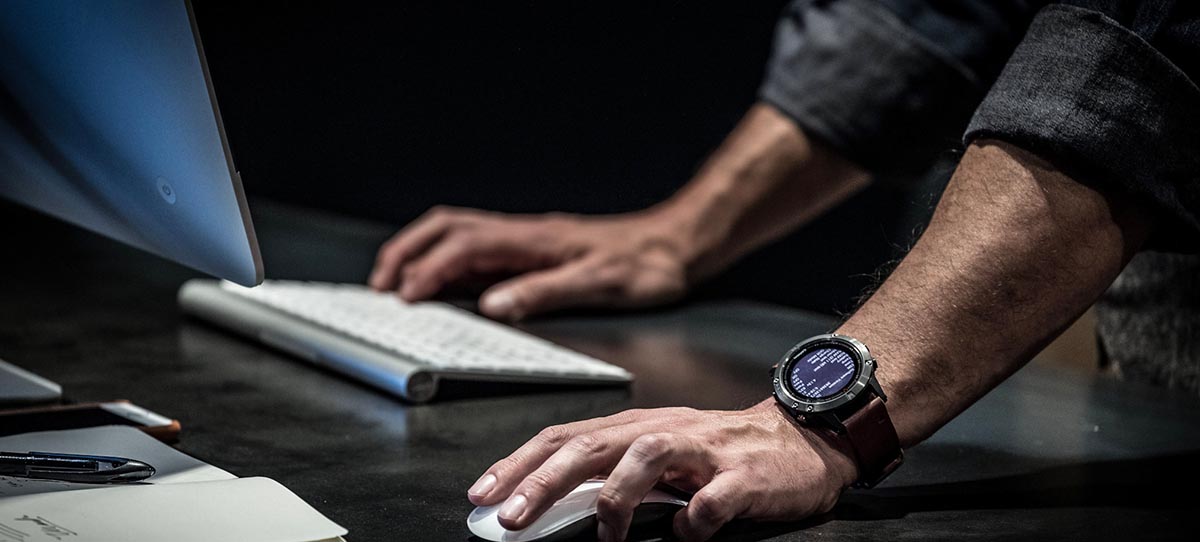
The Garmin Fenix 5X is a good-looking watch with a chunky, rugged and metallic build. The strap has a silicone rubberised stretchy design that makes even this slightly bulky wrist adornment sit in place, even during activities. Exposed screws, brushed metal buttons and a sapphire glass screen all help add a finish to this sports watch that makes it a wear-anywhere device.
The same can be said for the screen: it’s a sunlight-ready, memory-in-pixel colour display. This means it will be kind to the battery and can still be read clearly in daylight. In my experience, smaller data screens can be more difficult to read at-a-glance when bouncing up and down running – but you can always edit layouts for clarity if you need, even while running.
The inclusion of a metallic-clasp strap allows gives this watch a touch of the smart for when out and about. Be warned, though: despite an easy QuickFit system to swap straps, the metallic strap may require special tools or a trip to the jewellers to get it to the size you want. I didn’t even wear it, as that was all too much hassle.
Setup is super simple, especially if you already have a Garmin Connect account. Download the app, pop in your details, then connect to the watch via Bluetooth for setup. It will ask you which sports are your favourites, so you then have those available with data screens setup on the watch. You can add more later, but this is an easy way to personalise your experience from the start, so you’re ready to go right away.
GPS acquisition is fast on the Fenix 5X – I mean instant fast. I’ve not used a watch that’s managed to find GPS the second I walk out the door, but the Fenix 5 X – with its steel EXO antenna bezel – does just that. You realise just how great that is the second you try any other device and you’re stood around on your driveway staring at your wrist in the cold. It's a real plus for the Fenix 5X.
Thanks to the mega battery on this device it's possible to have all-day activity tracking and sleep analysis at night, all without worrying about running out of power.
I put it to the ultimate test doing an ultra marathon, while supporting a friend. In the end, I was out for more than 10 hours with GPS on constantly. I also had smartphone notifications turned on via Bluetooth and was controlling music on the phone using the watch. Despite all this, the watch was still at 50% when we'd finished – an impressive feat when you consider it was also monitoring heart rate that entire time too.
I also noticed that the pace screen adapted in bursts, rather than trying to average pace. The Forerunner 630 will try to offer a smooth pace, so even when losing signal it will adapt only incrementally. The Fenix 5X, on the other hand, appears to just jump as it finds signal again – which is actually better as you know it’s right. It's either way out, which you'll spot, or bang on. The Forerunner alternative leaves it only slightly out, so you suspect it’s wrong but can’t be sure and might end up running too fast.
I also tried stand-up paddle boarding, swimming, cycling and hiking. As you can imagine, the selection of data screens is similar, with extras such as strokes for paddle boarding and swimming. These are surprisingly accurate, but left me feeling a bit like they weren’t that useful. Perhaps if you’re taking paddle boarding more seriously (which is against the relaxed sport’s ideology surely?) then this could be helpful.
For cycling, there are lots of options – such as using Strava Live Segments and connecting to ANT+ sensors for cadence, power and more. This is a really comprehensive offering, but with the main screen on your wrist it makes seeing any of that data awkward. If you’re a keen cyclist and see yourself using this a lot then investing in a bike mount and spending time to setup your data screens as all large could be worth the effort.